Women with Disabilities Victoria welcomes ADHD reform to expand diagnosis and care through GPs.

Women with Disabilities Victoria welcomes ADHD reform to expand diagnosis and care through GPs.

Women with Disabilities Victoria (WDV) welcomes the Victorian Government’s decision to enable GPs to diagnose and treat ADHD, saying the reform will cut wait times, reduce costs and make diagnosis and care more accessible for women and gender diverse people with disabilities. The $750,000 investment will deliver accredited training to an initial 150 GPs by September, expanding access to assessment and ongoing treatment through trusted primary care providers. 

As a Disabled People’s Organisation and peak body run for and by women and gender diverse people with disabilities, WDV says the current system too often reflects ableism and gender bias, creating long waits, high costs and complex pathways that exclude people from care. Strengthening primary care is a practical way to reduce these systemic barriers and make diagnosis and support more inclusive and accessible. 

“GPs are the front door to our health system. Right now, many women, girls and gender diverse people seeking a diagnosis face long waits, high costs and complex referral pathways to see a specialist, and that doesn’t work for many with ADHD,” said Trishima Mitra-Khan, Chief Executive Officer, WDV.  

“Gender bias in health means that many women have been systematically dismissed, misdiagnosed or diagnosed much later in life. For many of us, late diagnosis isn’t accidental, it reflects sexism and ableism in how ADHD has been researched, recognised and treated. Removing regulatory barriers and equipping GPs with accredited training is a welcome workforce and equity reform. It brings assessment and treatment closer to home through the health professionals people already know and trust,” said Lauren Zappa, Head of Workforce Development, WDV. 

Zappa says her own experience reflects what many others face. 

“When I started seeking a diagnosis in my late 30s, my GP was the first person I spoke to. She was supportive, but I still spent weeks trying to find a psychiatrist, choosing between waiting months for an affordable appointment or paying thousands of dollars to be seen sooner. For someone with ADHD, even organising appointments can feel overwhelming. Once I was diagnosed, most of my ongoing care was delegated back to my GP anyway. Being able to access diagnosis and treatment directly with my GP would have saved me time, money and precious energy.” 

WDV welcomes this decision by the Allan Government and Victorian Health Minister Mary-Anne Thomas, and we look forward to participating in stakeholder consultations to ensure these reforms reflect the needs and experiences of women, girls and gender diverse people with disabilities across Victoria. 

About Women with Disabilities Victoria

Women with Disabilities Victoria is a not-for-profit Disabled People’s Organisation and peak body representing women and gender diverse people with disabilities. We are run for and by our community. We advocate for safety, respect and equity, with a focus on health services, violence prevention, leadership and systemic change to ensure all women and gender diverse people with disabilities can live safe and fulfilling lives. 

Media contact:

Name: Lauren Zappa
Title: Head of Workforce Development
Phone: 0401 201 709
Email: [email protected] 

WDV Appoints Sector Leader for its next phase of impact

WDV Appoints Sector Leader for its Next Phase of Impact

The Board of Women with Disabilities Victoria (WDV) is delighted to announce the appointment of Dr. Trishima (Trish) Mitra-Kahn as Chief Executive Officer (CEO), commencing 5th January 2026. Dr. Mitra-Kahn’s appointment follows an extensive search led by executive recruitment firm Brooker Consulting and a rigorous selection process.

WDV Chairpersons’ Helena Jordan and Marlena Raymond said: “Dr. Mitra-Kahn is an exceptional appointment. Trish is a proud Disabled Woman of Colour with a proven commitment to intersectional feminist practice and has a strong values alignment to WDV. Throughout her career, she has championed global, federal and state-based initiatives on preventing and responding to gender-based violence and on improving community health and wellbeing. With her policy nous, commercial acumen, and practitioner roots, the Board believe she is well placed to steer the organisation into its fourth decade.”

Dr. Mitra-Kahn is currently a Director at Safe Steps (Victoria’s 24/7 family violence response service as well as a specialist family violence service provider for People with Disabilities). She was previously Director of Research and Planning at Family Safety Victoria where she delivered significant Royal Commission initiatives and co-led Victoria’s input into the National Plan to Reduce Violence against Women and Children 2022-2032. She has also held high-level executive roles in the family violence sector including as CEO of the Luke Batty Foundation and Deputy CEO of Domestic Violence NSW.

Dr. Mitra-Kahn started her executive career as Director-Research at ANROWS: Australia’s national research organisation guiding policy and practice to reduce violence against women and children. At ANROWS, she led the organisation’s collaboration on Change the Story – Australia’s national evidence-based framework to guide a coordinated and effective approach to preventing violence against women and children. Alongside these roles, as a HR consultant, she has advised national and statewide Disabled People Organisations on talent acquisition and management.

Dr. Mitra-Kahn said: “It is an honour to take up this role alongside such a skilled staff team, dedicated Board, and active membership. As a Disabled woman, I am committed to learning from and amplifying the expertise of our diverse community, who for decades have led the way on ensuring we can lead safe and thriving lives. I look forward to being guided by our members’ and community’s tenacity and wisdom for I know that collectively, we hold the solutions.”

Dr. Mitra-Kahn will be succeeding Julie Kun, who has been WDV’s Acting CEO since October 2024. The Board extends its deepest gratitude and warm congratulations to Julie for her transformational leadership. WDV Chairpersons’ Helena Jordan and Marlena Raymond said: “under Julie’s leadership, WDV has built our profit for purpose impact work and nurtured our staff’s skills and experiences to fuel authentic, mission-aligned contributions. Julie has worked with staff to build infrastructure and ways of working to amplify our reach and pursue values-driven initiatives that deliver lasting social change.”

Acting CEO Julie Kun thanked the Board and staff and added: “I am thrilled that someone as experienced and knowledgeable as Dr. Mitra-Kahn is stepping into the CEO role. I am confident WDV will be in excellent hands.”

The Board looks forward to an exciting time of growing WDV’s impact and unique Statewide footprint for women and gender diverse Victorians with disabilities.

An image of Dr Trishima (Trish) Mitra-Kahn, WDV's newly commencing CEO.

An image of Dr. Trishima (Trish) Mitra-Kahn, WDV’s newly commencing CEO. She is smiling at the camera, leaning against a brick wall.

“Inclusive Victoria” – How does the new State Disability Plan support women?

“Inclusive Victoria” – How does the new State Disability Plan support women?

“Inclusive Victoria” – How does the new State Disability Plan support women?

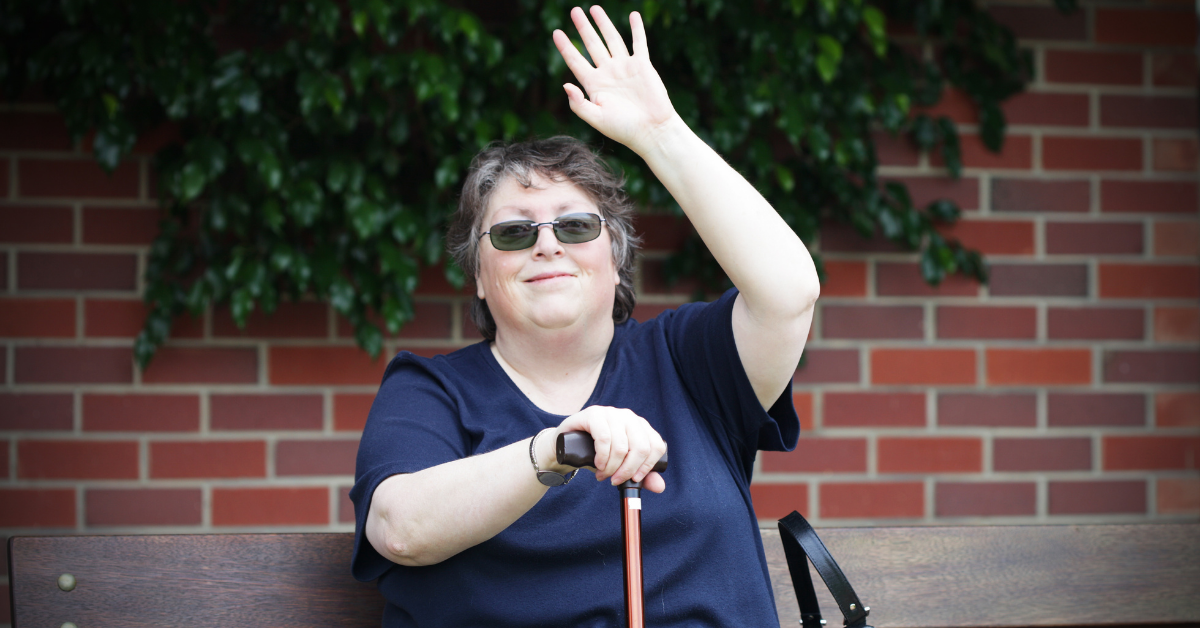
A white woman with short grey hair and sunglasses sits outise on a ench in front of a brick wall and tree. She holds a cane in her right hand. Her left hand is raised as though to ask a question.
Image sourced from Canva.

The Victorian Government released its new State Disability Plan this week: Inclusive Victoria: state disability plan (2022–2026). The plan aims to improve disability access and inclusion across Victorian services, including health, sexual assault and family violence services.

At Women with Disabilities Victoria (WDV), we are pleased that the plan recognises the gendered nature of violence against women. Sexual and reproductive health and parenting supports have also been included.

In the plan, the Victorian Government has committed to making family violence refuges meet disability access standards, according to the Disability Discrimination Act.

If the plan is followed, we should see a much needed increase in accessible private and social housing. We could also see an increase in resources devoted to Disability Action Plans, disability leadership and the accessibility of information provided by the Victorian Government.

WDV appreciates the work that has been done to ensure that this plan is put into action across government departments. It’s important that disability access and inclusion is part of all of the work that government does.

The plan shows a commitment to the Disability Discrimination Act and the Human Rights of people with disability.

We look forward to seeing which activities in the plan are supported in the May budget.