Read the full wrap-up below:
Joint Statement from Women with Disabilities Australia, Women with Disabilities ACT and Women with Disabilities Victoria
Women with Disabilities Australia (WWDA), Women with Disabilities ACT (WWDACT), and Women with Disabilities Victoria (WDV) stand united in our endorsement of WWDA’s 2025 Federal Election Platform and 2025-26 Federal Budget Response.
WDV’s Acting CEO, Julie Kun, says that: “21.8% of all women and girls in Australia identify as having disability. It is imperative that our needs are addressed by the government. We all deserve to live with safety, respect, and access to the health and community support we need. The government’s implementation of Australian Peak Bodies for women with disabilities endorsed federal platform and budget response, is essential to making this a reality.”
To read the full joint statement in either PDF or Word format, click the link(s) below:
WDV Youth Blog: Endometriosis Awareness Month
March is Endometriosis awareness month. Sharing their experiences with the disease that affects 1 in 7 people assigned female at birth is WDV Youth Expert by Experience Teagan Mitchell.
Sharing ‘endo facts’ and her own experiences, Teagan hopes to provide a greater understanding of invisible disability and the condition.
Click the link to read the full piece:
Free Short-term Technical Advice and Assistance!
Free Technical Advice and Assistance for Building Disability Access and Inclusion in the workplace!
Are you a Victorian organisation looking to enhance employee disability access and inclusion from recruitment to onboarding and ongoing support? If so, WDV is here to help!
We are offering FREE short-term advice and assistance to organisations committed to recruiting and supporting women and gender-diverse people with disabilities as employees or leaders. This incredible opportunity is part of our Sharing our Expertise project, leveraging our extensive experience to foster inclusive workplaces.
Interested? Please contact us on social media or via emailing the Advocacy Lead, Helen Freris, at [email protected].
Announcing the Resignation of WDV CEO, Nadia Mattiazzo
With sadness we share the news of the resignation of our CEO, Nadia Mattiazzo, as she leaves to pursue other opportunities. During her time as WDV CEO, Nadia made an enormous contribution to progressing the rights of women and gender diverse people with disabilities in Victoria.
Nadia has been with WDV since 2017 and led WDV through the incredibly challenging COVID lockdown period. Nadia has ensured that women and gender diverse people with disabilities were never far from the minds of government decision-makers and community influencers. Along with WDV staff, she built WDV’s intersectional practice and championed genuine co-design.
We sincerely thank Nadia for her service to WDV and the disability community and wish her, and Abbie, her furry companion, all the best for their future endeavours.
Recruitment for a new CEO will begin in the new year, and we’re lucky to have the wonderful Julie Kun continuing as Acting CEO until a new CEO is recruited.

Police and other services need to believe women with disabilities when we report violence
Police and other services need to believe women with disabilities when we report violence.
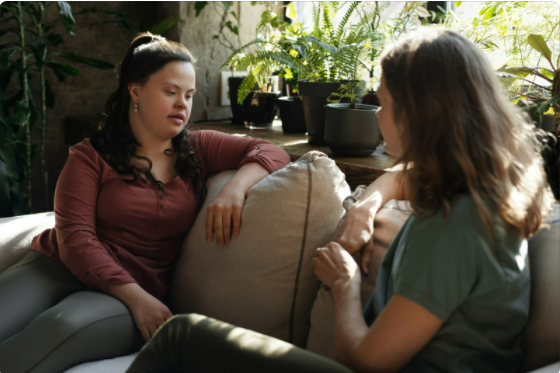
Last week, the Disability Royal Commission heard about violence against women and girls with disabilities. Our Senior Policy Officer, Jen Hargrave, was at the hearing.
Women with disabilities appeared as witnesses and told their personal stories. Many spoke about how they did not get much support the first time they experienced violence. This was part of why they experienced more violence, often over many years, from different perpetrators.
Witnesses made many recommendations to the Royal Commission about how women with disabilities who experience violence can be supported. For example, some women asked that police and other services believe them when they report violence.
Ms B (not her real name) said: “I want you to stop making Royal Commissions, stop making recommendations and actually do it. Laws in place, no more empty promises.”
You can watch a video of Ms. B talking to the Disability Royal Commission on Twitter.
Tasmanian Legal Aid also spoke to the Disability Royal Commission. They support many women with disabilities experiencing family violence.
Tasmanian Legal Aid recommended that there should be a national legal and social service to support people with disabilities experiencing family violence. They said that the service should also support people with situations that involve child protection, family law and housing.
The last people to give evidence were from the National Disability Insurance Agency (NDIA). WDV recently did some research with the University of UNSW and Women with Disabilities ACT (WWDACT) about women and the NDIS. We found that women and girls don’t get a fair go at accessing the NDIS. The NDIA have not done anything to change this unfairness.
The NDIA also told the Royal Commission they don’t have any certain plans to improve how they respond to people with disabilities who are experiencing family violence. They could not say what the NDIA definition of family violence is.
Jen Hargrave and WDV member Nicole Lee wrote about the NDIA’s evidence on Twitter.
Clear indication that they don’t get it, and the massive reason why any changes, services, steps forward from here must be done with the disabled womens orgs @WWDA_AU @WDVtweet @WWDACT to name a few, and the family violence, sexual assault, and womens sectors.
— Nicole Lee (@_Nic_Lee) April 1, 2022
For more information about the Disability Royal Commission hearing on violence against women and girls with disabilities, please see Women with Disabilities Australia’s Twitter account.
The Commission’s next scheduled hearing will be 11 – 13 April. This hearing will be about the experience of people with disability working in Australian Disability Enterprises.
If you would like support around any of the issues in this post, please reach out.
You can call Lifeline on 1800 55 1800. Lifeline also has an online crisis chat service.
You can call 1800 RESPECT on 1800 737 732.
Blue Knot has a dedicated counselling service for people impacted by the Disability Royal Commission which you can call on 1800 421 468.
“Inclusive Victoria” – How does the new State Disability Plan support women?
“Inclusive Victoria” – How does the new State Disability Plan support women?
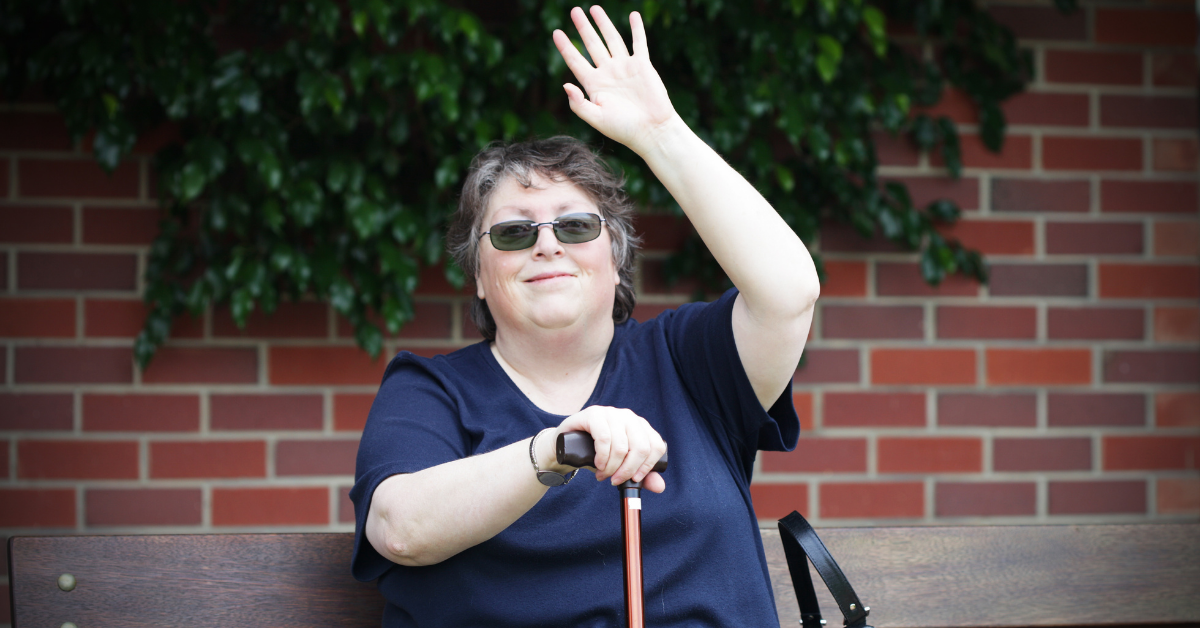
The Victorian Government released its new State Disability Plan this week: Inclusive Victoria: state disability plan (2022–2026). The plan aims to improve disability access and inclusion across Victorian services, including health, sexual assault and family violence services.
At Women with Disabilities Victoria (WDV), we are pleased that the plan recognises the gendered nature of violence against women. Sexual and reproductive health and parenting supports have also been included.
In the plan, the Victorian Government has committed to making family violence refuges meet disability access standards, according to the Disability Discrimination Act.
If the plan is followed, we should see a much needed increase in accessible private and social housing. We could also see an increase in resources devoted to Disability Action Plans, disability leadership and the accessibility of information provided by the Victorian Government.
WDV appreciates the work that has been done to ensure that this plan is put into action across government departments. It’s important that disability access and inclusion is part of all of the work that government does.
The plan shows a commitment to the Disability Discrimination Act and the Human Rights of people with disability.
We look forward to seeing which activities in the plan are supported in the May budget.
International Women’s Day 2022!
International Women’s Day 2022
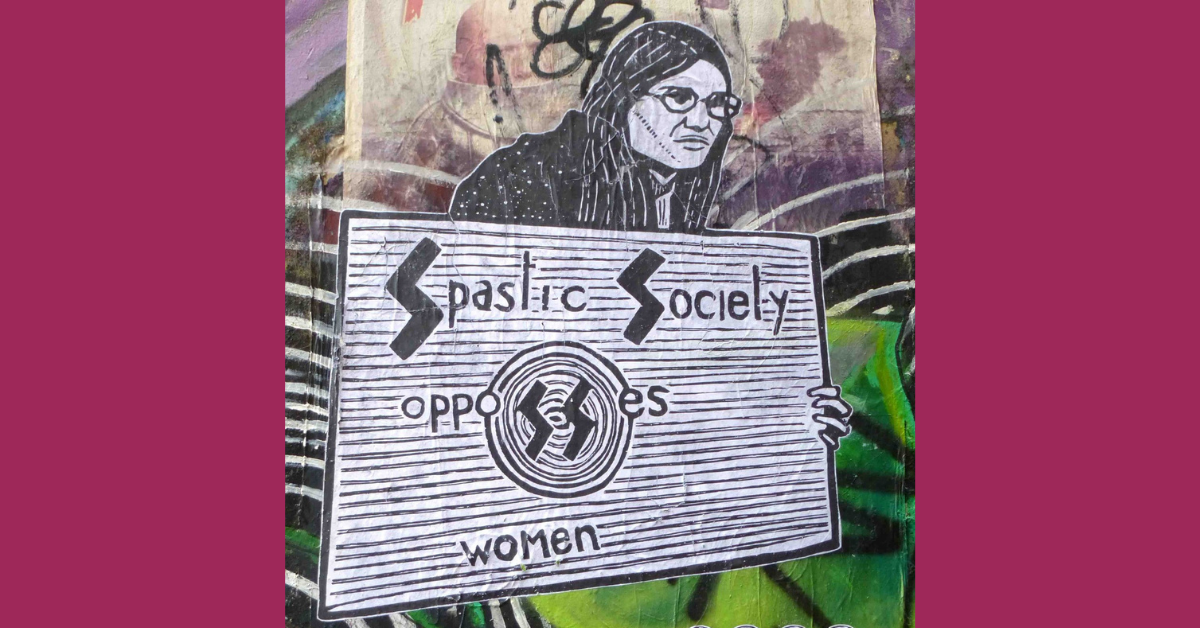
Let’s have a conversation about the issues that impact women with disabilities, and how we can lift up each other’s voices on International Women’s Day.
It’s March 8, which means that IWD (International Women’s Day) festivities are going on around the world with morning teas, exhibitions, discussions, community events, and general celebration of the successes and achievements of women over the last year.
It’s also a day to think about the ways that women experience discrimination, and how far we have to go before we live in a world with true gender equality. As women with disabilities, we sometimes experience this discrimination in ways our able-bodied counterparts might not.
Women face discrimination in health services, with the medical system (on average) underestimating and undertreating women’s pain, and under-researching conditions that primarily impact women. The impact of this is disproportionately felt by women with disabilities who depend more heavily on these services.
Women face financial disadvantages, with lower wages over our lifetimes. Data from the Workplace Gender Equality Agency released last month shows women typically earn about $25,000 less annually than men. Women are more likely to be engaged in unpaid labour (caring for family, work around the house, volunteering at schools, organising get togethers …) and more likely to be in part-time or insecure work.
Women with disabilities face the additional challenge of disability discrimination in workplaces, and lack of physical access. Workforce participation rates for Australian women with disabilities is 49 per cent, compared with Australian women generally at 72 per cent. Men with disabilities have a 58 per cent participation rate.
For a shining moment during the pandemic, when non-disabled people needed access to work from home setups, it seemed that employment might become far more accessible to women (and men) with disabilities who struggle to access transport or can only work from home. It’s easy to feel forgotten as the pressure now mounts to return to the office.
Financial disadvantage is also a driver of domestic violence. Lack of access to funds can dramatically reduce our independence and give family, intimate partners or the state much more control over our lives. For women with disabilities, this can be exacerbated by the partnered rate of the DSP (disability support pension), as our personal funds can be reduced or removed based on our partners’ salaries.
In Australia, women with disabilities make up 49 per cent of disabled people, but only 37 per cent of NDIS participants, making it very likely that many women with disabilities are depending on family and intimate partners for basic supports.
Women with disabilities are three times more likely to experience family violence than women without disabilities.
On International Women’s Day, we are being asked to change the climate. For women with disabilities this means challenging patriarchal ideas. It also means looking at the intersection between biases that impact women and the systemic discrimination against disabled people in all areas of our lives.
Whether you are a woman with disability or one of our allies, here are some ways to take action today:
- Follow the Disability Justice Networkon social media. There are many women with disabilities driving meaningful change for their communities as part of this network.
- Follow Astrid Edwards on social media. Astrid is a contributor in Growing Up Disabled in Australia.She is a member of the Victorian Disability Advisory Council, advocates for people living with MS and co-hosts a podcast called Anonymous Was A Woman which focuses on women in literature.
- If you are in or around the Melbourne CBD, check out Larissa MacFarlane’s IWD artwork on Hozier Lane. Larissa is an artist and disability pride advocate, and the work celebrates late disability activist Lesley Hall.
- Signing Hannah Diviney’s petition for a disabled Disney princess.Hannah is a disabled writer and advocate who was nominated for Young Australian of the Year. You can also follow her on Twitter and
- Attend the Victorian Mental Illness Awareness Council (VMIAC) webinar featuring women with lived experience of mental illness.
- Attend the online launchof the new Leadership Statement from Women with Disabilities Australia (WWDA). The statement was codesigned with women with disabilities and the event is free.
- Borrowing or buying a copy of We’ve Got This: Stories By Disabled Parents. This anthology, edited by writer, musician and disability advocate Eliza Hull, features stories by many prominent women with disabilities including Jacinta Parsons and Elly May Barnes.
- Donating to organisations that support women with disabilities. For example, you could donate to Women with Disabilities Victoria or become a member of Women with Disabilities Victoria.
Let’s raise our voices on #IWD.
Changing the landscape resource launch!
On Wednesday 9 February, we launched Changing the landscape: A national resource to prevent violence against women and girls with disabilities.
You can find the full Changing the Landscape resource on the Our Watch website.
The event was emceed by Our Watch Ambassador Drisana Levitzke-Gray, with an Acknowledgement of Country by Birri-Gubba/Urangan woman Jody Barney.
Our speakers included:
- Patty Kinnersly, Our Watch CEO
- Nadia Mattiazzo, Women with Disabilities Victoria CEO
- Dr Ben Gauntlett, Disability Discrimination Commissioner, Australian Human Rights Commission
- Jen Hargrave, Women with Disabilities Victoria
- Heidi La Paglia, Women with Disabilities Australia
- Ellen Fraser-Barbour, Purple Orange
- Dr Marg Camilleri, Federation University
- Frances Quan Farrant, People with Disability Australia
- Aurore Delcourt, Multicultural Centre for Women’s Health
- Melissa O’Reilly, Our Watch
Changing the landscape is an evidence-based resource that shows that violence against women and girls with disabilities is preventable, not inevitable.
This national resource names ableism and gender inequality as the two consistent, intersecting drivers of violence against women and girls with disabilities, and sets out the actions needed to address these drivers and stop this violence before it starts.